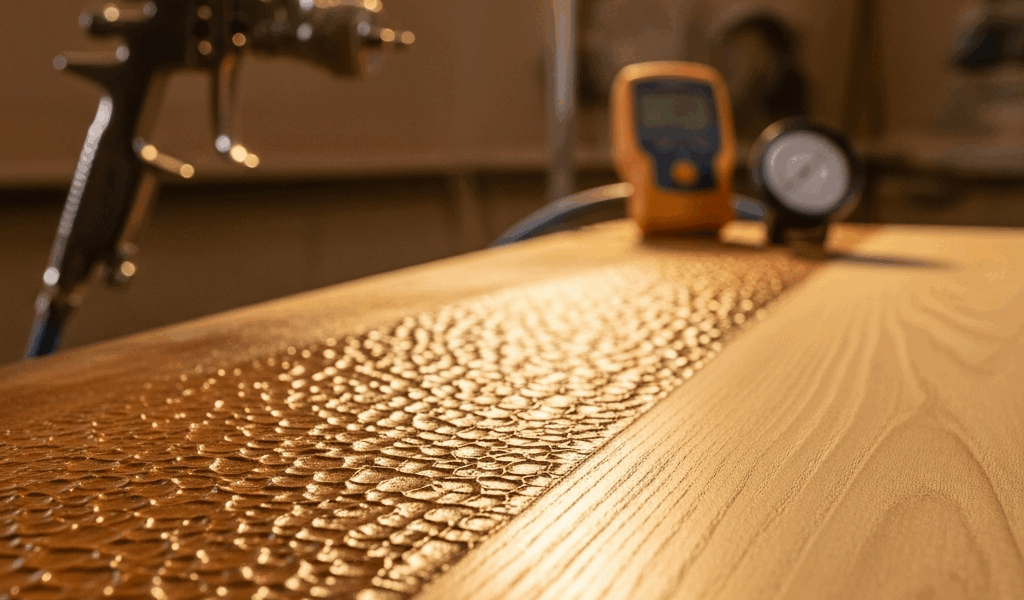
To fix orange peel in polyurethane, stop applying finish, let the defective coat dry or cure for the time required by that product, level the texture without cutting through the film, remove the dust, and recoat using the product maker’s spray settings. Do not add a universal percentage of thinner or use a generic pressure setting: “polyurethane” includes aerosol, brush-only oil-based, water-based, one-part spray, and professional catalyzed products with different instructions.
If the surface is still wet, resist the urge to flood it with another coat. A wet rescue can turn texture into runs, trapped solvent, or a longer cure problem. Stop, record the current setup, and correct one variable on a test panel before spraying the workpiece again.
Confirm that the defect is orange peel
| Appearance | Likely defect | What changes the repair |
|---|---|---|
| Even field of small rounded dimples | Orange peel or poor flow/atomization | Material, temperature, fluid delivery, air, tip, and technique |
| Rough, dusty surface with overspray | Dry spray | Finish may be drying before it reaches or flows on the surface |
| Distinct round craters where finish pulls away | Fish-eyes or contamination | Cleaning and contamination control, not simply more thinner |
| Random sharp bumps | Dust nibs | Dust control and intercoat leveling |
| Long ridges following an applicator | Brush or roller marks | Application tool, working time, and brushing technique |
View the surface under a low-angle light. Orange peel repeats across the film; dust nibs are isolated, and fish-eyes have a crater-like center. Diagnosing the wrong defect leads to the wrong correction.
First identify the exact polyurethane
Read the can label and current technical data sheet before changing viscosity or adding anything. Write down:
- the full product name and whether it is water-based, oil-based, aerosol, or catalyzed;
- whether spraying is an approved application method;
- the permitted reducer, extender, or thinner and its maximum amount;
- recommended tip or air-cap range, if supplied;
- application-temperature and humidity limits;
- recoat, sanding, and full-cure times; and
- required wet-film or coverage rate.
This step prevents a common mistake: applying professional spray advice to a consumer brush product. For example, current directions for Minwax Fast-Drying Polyurethane specify a natural-bristle or foam brush, thin coats, no thinning, and sanding with fine paper after the stated drying interval. Those directions do not support putting that product in a spray gun and choosing a generic reducer ratio.
How to repair cured orange peel
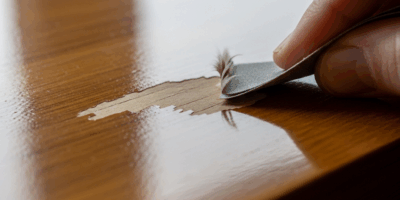
- Wait for the product’s sanding window. “Dry to touch” is not the same as ready to sand. If the film gums up the abrasive, stop and give it more time.
- Test a hidden area. Use the grit or pad recommended for intercoat sanding by the manufacturer. Avoid beginning with aggressive 120- or 180-grit paper unless the product instructions specifically call for it.
- Level the high points. Sand lightly with a flat backing pad where the shape permits. The goal is an evenly dull surface, not removal of the entire coat.
- Watch edges and profiles. Film is easiest to cut through on corners, edges, beads, and raised details. Treat these areas by hand with minimal pressure.
- Remove residue as directed. Vacuum and use the cleaning method compatible with the coating. A tack cloth containing incompatible wax or resin can create a new adhesion problem.
- Recoat a test panel first. Match the workpiece’s preparation and orientation. Confirm that the corrected setup flows before returning to the project.
If the texture is deep, the film remains soft, or sanding exposes bare wood in scattered areas, stop patching. Let the coating reach the manufacturer’s required cure, then decide whether the surface can be uniformly leveled and recoated or must be stripped. Mixing unknown products or recoating outside the stated window can create adhesion failure.
Fix the cause before the next spray pass
1. Balance fluid delivery and atomization
General Finishes identifies too much fluid with insufficient atomization as one cause of orange peel in its water-based finishes. The remedy is not automatically “more pressure.” Use the finish maker’s tip guidance together with the spray-equipment manual, then adjust fluid and atomization on a test panel.
Make one change at a time. If you simultaneously change the tip, air, fluid control, reduction, distance, and speed, you will not know which change solved—or worsened—the defect.
2. Bring the finish, surface, and room into the approved range
A warm room does not guarantee a warm workpiece or warm coating. General Finishes specifically warns that cool conditions impair leveling of its water-based finishes and recommends checking the temperature of the wood and finish, not only the air.
Use the limits printed for your product. Do not treat a single 65–85°F or humidity range as universal. Water-based and solvent-borne products respond differently, and professional systems may have narrower application windows.
3. Check viscosity using the approved method
Strain the finish if the manufacturer permits it, mix as directed, and use the viscosity method specified for that coating and spray system. A Ford-cup time copied from another product is not a specification for yours.
Only add a named reducer or extender when the product data sheet allows it. Stay within the permitted amount. An additive changes more than flow: it can affect dry time, film build, cure, clarity, and durability.
4. Correct distance, speed, and overlap together
Hold the gun square to the surface and maintain a consistent distance through the stroke. Arcing the gun changes both distance and film thickness. Use the equipment maker’s starting distance and overlap, then confirm the wet pattern on paper or a test board.
- A pass that is too dry may not flow together.
- A pass that is too wet may sag or trap solvent.
- Moving farther away can increase dry spray.
- Moving too slowly or overlapping excessively can overload the film.
Fuji Spray’s orange-peel troubleshooting guidance likewise treats material, atomization, and application technique as a system. Use the manual for your turbine or gun rather than assuming one PSI figure applies to every HVLP setup.
A controlled test sequence
- Prepare several scrap panels exactly like the project.
- Set the finish, workpiece, and room within the product’s approved conditions.
- Start with the product and equipment manufacturers’ tip, air, fluid, and distance settings.
- Spray one panel and let it flow for the specified observation time.
- If texture remains, change only one variable and label the next panel.
- Let the winning panel reach the relevant dry or cure checkpoint before committing to the project.
A test panel costs less than sanding a cabinet, tabletop, or full set of doors. Keep notes so the same material and shop conditions can be reproduced later.
What if the polyurethane was brushed or rolled?
A dimpled brush-applied film may come from bubbles, roller stipple, overworking, contamination, or poor leveling rather than spray orange peel. Follow the application tool, coat thickness, temperature, and recoat directions for that exact product. Do not use spray-gun remedies on a brushed coating.
For a dry brushed film, allow the required drying time, level it with the manufacturer’s intercoat abrasive, clean it correctly, and apply the next thin coat with the approved applicator. If the finish pulls away into craters, investigate silicone, wax, oil, or other contamination before recoating.
Safety before sanding or spraying
- Read the label and safety data sheet for the exact finish, reducer, and cleaner.
- Provide the required ventilation and keep ignition sources away from flammable vapors.
- Use respiratory, eye, skin, and hearing protection specified by the product and equipment makers.
- Control sanding dust; older coatings may contain hazardous materials.
- Store and dispose of solvent-contaminated materials exactly as the label and local rules require.
- Do not spray catalyzed or isocyanate-containing coatings without the training and protective system their safety documents require.
Official product and equipment guidance
- General Finishes: causes of orange peel in water-based spray finishes
- General Finishes: water-based spray troubleshooting
- Fuji Spray Systems: orange-peel troubleshooting
- Minwax: Fast-Drying Polyurethane directions
- Rust-Oleum: Varathane Interior Oil-Based Polyurethane technical data
Technical guidance verified August 2026. Product formulations and instructions can change; the current label and technical data sheet control.


Stay in the loop
Get the latest fine finish wood working updates delivered to your inbox.