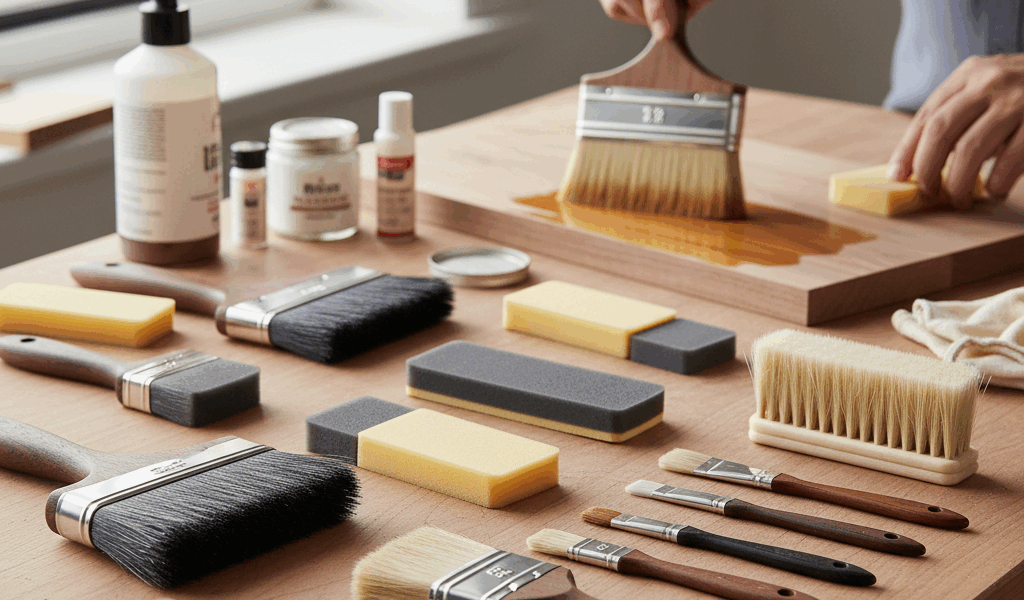
Picking the right finishing brush has evolved with all the brands and marketing claims flying around. As someone who’s gone through dozens of brushes over the years — cheap ones, expensive ones, everything in between — I spent real time learning the ins and outs of matching brushes to finishes. Today, I will share it all with you.
This article includes affiliate links. We may earn a commission at no extra cost to you.
Using the wrong brush is one of the fastest ways to ruin an otherwise perfect finish. Natural bristle brushes and synthetic brushes serve different purposes, and mixing them up leads to disappointing results. I wasted a lot of finish and a lot of time before I figured out why.
Natural Bristle for Oil-Based Finishes
Natural bristle brushes — typically made from hog or ox hair — work best with oil-based stains and varnishes. They hold more finish and release it smoothly for an even coat. There’s a reason old-timers swear by them. The way a good natural bristle brush lays down oil-based varnish is honestly kind of beautiful.

Synthetic for Water-Based Products
Water-based finishes require synthetic brushes. Period. Natural bristles absorb water, go limp, and leave ugly brush marks everywhere. Nylon or polyester brushes maintain their shape and deliver consistent results with water-based products. I learned this one after ruining a tabletop with a natural bristle brush and water-based poly. Never again.
Investment vs. Cheap Brushes
Probably should have led in this section, frankly. A quality brush costs more upfront but saves money long-term. Cheap brushes shed bristles into your finish — and if you’ve ever spent twenty minutes picking tiny bristles out of a wet coat of varnish, you know exactly how maddening that is. They also wear out fast. Clean and store good brushes properly and they’ll last years. I’ve got a Purdy that’s been with me for over a decade.
That’s what makes brush selection endearing to us finishing fanatics — match your brush to your finish, maintain it well, and your projects will show the difference immediately.

Stay in the loop
Get the latest fine finish wood working updates delivered to your inbox.