Using a tack cloth between finish coats has gotten complicated with all the debates about residue and alternatives flying around. As someone who’s chased dust specks out of more finishes than I care to admit, I learned everything there is to know about keeping surfaces clean for flawless results. Today, I will share it all with you.
Dust specks trapped in finish ruin otherwise perfect work. It’s maddening — you spend hours on a piece and then a few particles of dust leave it feeling like sandpaper. A tack cloth removes these particles before each coat, and it’s the simplest upgrade you can make to your finishing routine.
What Is Tack Cloth, Anyway?
Tack cloth is loosely woven cheesecloth treated with a sticky resin. It picks up dust particles that regular wiping misses completely. You can grab one at any hardware store for a few bucks. I always keep a stash in my shop because running out mid-project is the worst.

Proper Technique
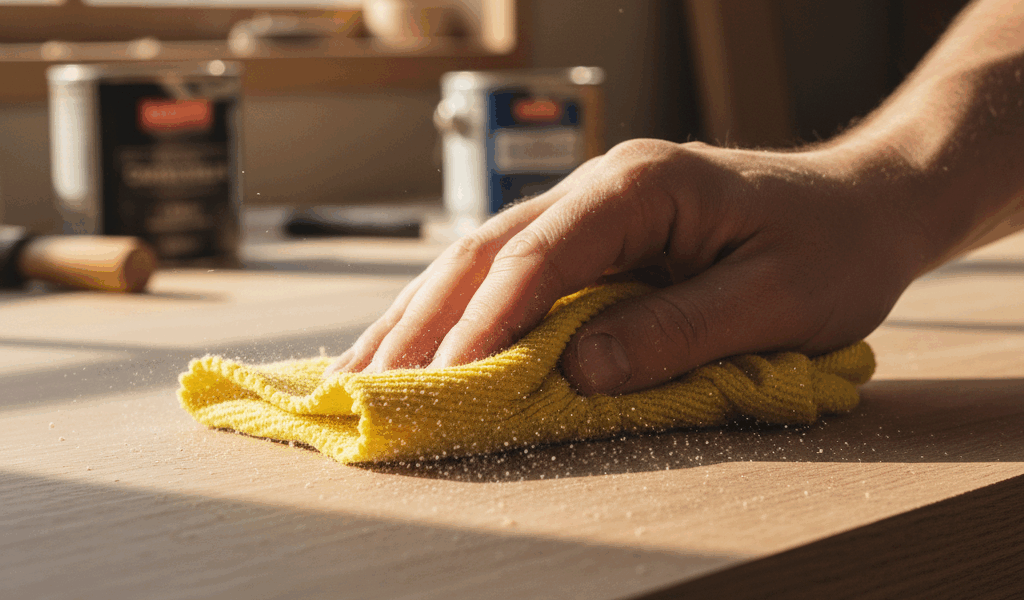
Probably should have led with this section, honestly. Unfold the tack cloth and refold it loosely — don’t wad it up into a ball. Wipe the surface lightly without pressing hard. Heavy pressure leaves sticky residue behind, which creates its own problems. Replace the cloth when it stops picking up dust effectively. You’ll feel the difference.
Store It Right
Tack cloths dry out if exposed to air, and a dried-out tack cloth is about as useful as a regular rag. Keep them in a sealed plastic bag or their original container. I learned this one the hard way after tossing a “dead” cloth only to realize I’d left the bag open overnight.
That’s what makes the tack cloth endearing to us finishing enthusiasts — it’s cheap, it’s simple, and it prevents the single most common finishing defect out there. Use it before every coat and you’ll wonder why you ever skipped it.



Stay in the loop
Get the latest fine finish wood working updates delivered to your inbox.