
Raise the grain before staining when your water-based product’s instructions recommend it and a sample shows that the wood becomes fuzzy. Pre-wetting is a preparation option, not a universal requirement for every wood or finish. If the wood is already stained, pause before sanding: you can remove color along with the raised fibers.
Choose the right stage first
| Your surface | What to check |
|---|---|
| Bare wood, before water-based stain | Test the complete preparation and stain sequence on a matching offcut. Decide whether pre-raising improves that sample. |
| Already stained, but rough | Check the stain and topcoat instructions before sanding the color layer. This is a repair decision, not the same preparation step. |
| First clear coat has dried | Follow that coating’s directions for drying and between-coat sanding. Do not assume the bare-wood grit applies here. |
A manufacturer-backed example for bare wood
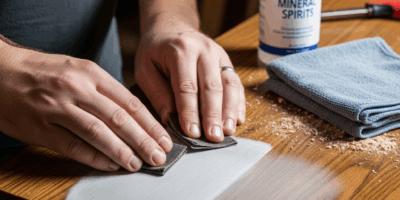
General Finishes’ dye-stain guidance describes dampening the sanded surface with a distilled-water-moistened cloth, letting it dry, then sanding lightly with the grain using 220-grit paper. That is guidance for its dye-stain preparation, not a grit prescription for every product. The same guidance identifies sanding the first topcoat as an alternative way to address grain raise.
Use the instructions for your actual stain and finish to choose the sequence. Do not substitute a fixed drying time from another product or assume that more sanding always gives better results.
Why the sample matters
Preparation affects color as well as smoothness. General Finishes’ preparation instructions distinguish sanding recommendations by wood and stain type, warn against over-sanding, and describe pre-wetting oak or ash as optional. They also caution against oil-containing tack cloths with water-based finishes.
Label your sample with the wood, sanding sequence, stain and topcoat. Compare the completed sample before committing to the whole project. Our guide to testing stain on scrap wood covers that planning step.
What if the grain rose after staining?
Do not repeat bare-wood preparation over a colored surface without checking the finish system. The manufacturer guidance above offers an alternative involving the first topcoat. Check whether that option applies to your products, rather than sanding damp stain or stripping a finish simply because the surface feels rough.

Stay in the loop
Get the latest fine finish wood working updates delivered to your inbox.