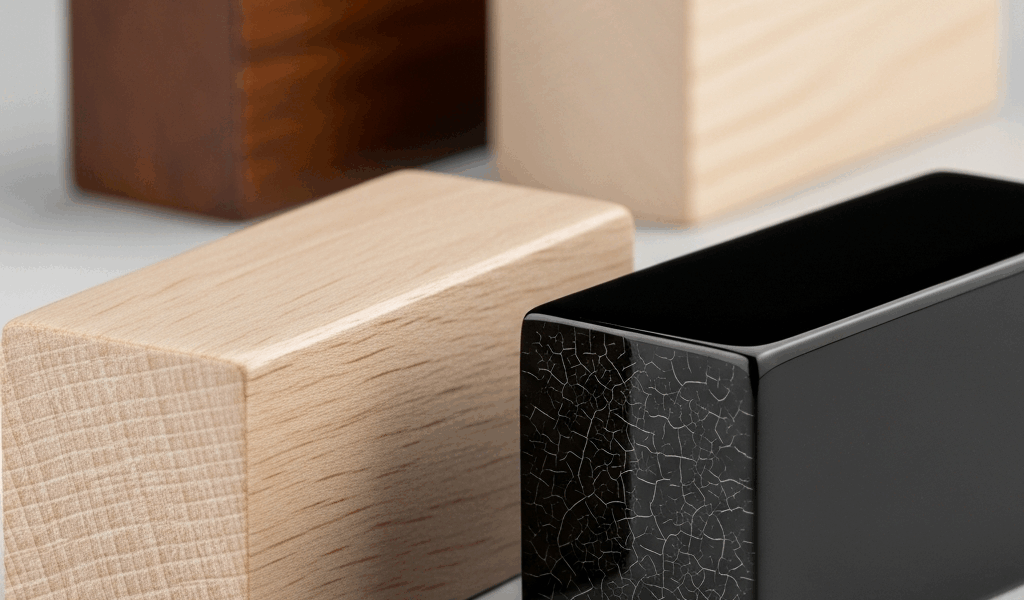
Polyurethane vs Lacquer — Which Wood Finish Lasts Longer?
Wood finishing has gotten messy with all the conflicting advice flying around. As someone who’s been woodworking seriously for about fifteen years, I taught myself the working side of polyurethane and lacquer the hard way — through ruined tabletops, wasted afternoons, and one genuinely embarrassing spot-repair job I’ll get to later. People drag beat-up dining tables and long-neglected cabinets into my shop a few times every year, and the question is almost always the same: which finish actually holds up? The answer isn’t one sentence. It depends entirely on what you mean by “lasting” — and that distinction matters more than most finishing guides will tell you.
This article includes affiliate links. We may earn a commission at no extra cost to you.
Let’s get into it.
Durability Head-to-Head
Raw durability numbers favor polyurethane. Full stop. Drag a set of keys across cured oil-based poly, then do the same to lacquer — lacquer scratches first. Every time. Polyurethane — especially oil-based formulas like Minwax Helmsman or General Finishes Arm-R-Seal — lays down a hard plastic film that shrugs off abrasion, coffee mug heat rings, and whatever punishment a busy kitchen table absorbs on a Tuesday night.
But what is lacquer, exactly? In essence, it’s a fast-drying solvent-based finish that produces a hard, clear coating. But it’s much more than that — it’s the standard for fine furniture and instruments for a reason. Lacquer is hard, but it’s brittle hard. Think glass versus rubber. The surface looks genuinely stunning — that depth and clarity are unmatched — but it chips under impact and scratches under sustained friction. Finishing a display cabinet nobody touches? Lacquer wins on looks. Finishing a farmhouse table where someone’s kid is dragging a Lego brick across the surface while reaching for the salt? Poly holds up.
Water-based polyurethane splits the difference. Not quite as tough as oil-based, but products like Varathane Diamond Floor Finish or General Finishes High Performance Water Based Top Coat come surprisingly close. They also dry clearer — oil-based poly yellows over time, which looks warm and beautiful on walnut but genuinely terrible on maple or any painted surface.
- Oil-based polyurethane — highest scratch and heat resistance, amber tone, long cure time
- Water-based polyurethane — strong durability, crystal clear, faster dry time, lower odor
- Nitrocellulose lacquer — beautiful clarity, moderate hardness, chips under impact
- Catalyzed lacquer — much tougher than nitrocellulose, used in professional cabinet shops, requires specific mixing ratios
Catalyzed lacquer deserves a mention here — it changes the conversation significantly. Pre-catalyzed and post-catalyzed lacquers used in professional cabinet shops approach polyurethane-level hardness while keeping the spray characteristics that make lacquer appealing. But you’re not buying that at a hardware store. You’re ordering from a finishing supplier, mixing at precise ratios, using it within a specific window. It’s a different tool than what most hobbyists are actually working with.
The Repair Factor Nobody Mentions
The piece that matters most here. Because this is where the real-world comparison flips in a way that surprises almost everyone.
Lacquer has a chemical property that makes it almost magical for repairs — it re-dissolves into itself. Fresh lacquer sprayed over cured lacquer melts into the existing coat and bonds at a molecular level. A scratch on a lacquered surface can be fixed by spraying a little lacquer over the damaged area, letting it cure, and buffing it out. Done. Invisible. I’ve fixed lacquered guitar bodies this way — a light sand and polish later, and you genuinely cannot find where the repair was.
Polyurethane does not do this. Cured poly is cross-linked plastic. Fresh poly won’t bond to it the same way chemically, and spot repairs always leave a visible ring — you can see exactly where the new finish ends and the old one begins. The real solution is sanding down to bare wood and starting over, or sanding the entire surface and recoating everything.
Frustrated by a ring-stained dining table with four coats of oil-based poly on it, I once tried a spot repair with a small brush and matching poly. Scuffed the area, feathered the edges, applied thin coats — followed every tip I could find. It looked fine for about a week. Then the finish flattened differently in the repaired zone and it was obvious from across the room. Steer clear of where I went wrong. I ended up stripping the whole top with a random orbital and 60-grit and starting completely over.
For a working furniture maker — or a homeowner with nice pieces they want to maintain for decades — repairability is enormous. A lacquered piece gets touched up quickly and invisibly, which extends its practical life well beyond what any durability chart would suggest. A damaged poly-finished piece eventually needs a full refinish. Both finishes are durable. They’re just durable in completely different ways.
Which Dries Faster — and Why It Matters
In a production shop, drying time is money. Recoat time is the schedule.
Nitrocellulose lacquer sprayed from a gun is dry to the touch in 5 to 10 minutes — recoatable in 30. A single afternoon gets you three or four coats on a cabinet door. Cure overnight, sand and buff the next morning. That turnaround is exactly why professional cabinet shops default to lacquer. They can finish 20 doors in a day. That’s what makes lacquer endearing to us production-minded finishers, honestly.
Oil-based polyurethane brushed on takes 4 to 8 hours between coats — longer when temperature and humidity aren’t cooperating. In my unheated garage shop in November, I’ve had oil-based poly take a full 24 hours to dry enough to recoat safely. A three-coat finish on a table becomes a three-day project. Not a dealbreaker for a weekend woodworker on a single piece, but it adds up fast when you’re juggling multiple projects.
Water-based poly closes the gap considerably. Most formulas are recoatable in 2 hours. Still not as fast as lacquer, but far more manageable than oil-based. Minwax Polycrylic can reportedly be recoated in as little as 2 hours at room temperature — apparently pretty reliable in normal shop conditions.
There’s also the full cure timeline. Lacquer reaches full hardness in about 30 days but is handling-durable within 24 hours. Oil-based poly is similar — workable in a day or two, fully cross-linked after 30 days. This matters enormously for dining tables. A table put back into service too soon, before the finish fully cures, will show scratches and impressions that seem mysterious until you realize the finish was still soft underneath.
Health and Safety in Your Workshop
This section is non-negotiable — and I say that as someone who cut corners on ventilation early in my finishing career and paid for it with headaches and one memorable evening where I was genuinely dizzy for two hours after spraying lacquer in a small room with one cracked window.
Traditional nitrocellulose lacquer has serious VOC levels. The solvents are highly flammable and the vapors are heavier than air — they pool along the floor and find ignition sources you didn’t think about. A spray booth with explosion-proof fans is the right setup. If you’re spraying lacquer in a garage, every pilot light, water heater, and power tool gets switched off and unplugged. The flash point on lacquer thinner sits around 40°F — well below room temperature — and it ignites fast. A dust mask does nothing against those vapors. You need a respirator with organic vapor cartridges. A 3M 6502 with 6001 cartridges runs about $35 at most hardware stores — that’s the minimum for regular lacquer use.
Water-based polyurethane is significantly safer. VOC content is much lower, the smell is minimal, and while ventilation still matters, the fire risk drops dramatically. Water-based products might be the best default option for hobbyists, as finishing in attached garages or tight spaces requires lower acute risk tolerance. That’s because the consequences of getting it wrong with lacquer are fast and serious. This is also why water-based products have taken over in most school woodshop programs.
Oil-based poly sits in the middle — more VOCs than water-based, less acute danger than lacquer, but solid ventilation and organic vapor cartridges are still recommended if you’re sensitive to solvent fumes.
If polyurethane is the better family for your project, use the complete polyurethane wood finish guide to choose water- or oil-based chemistry, sheen, preparation, and a label-approved application schedule.
The Verdict by Project Type
Here’s where I stop hedging and give you actual answers.
Dining Table or Kitchen Table
Water-based polyurethane. Three coats minimum — four if the table gets heavy daily use. Scuff between coats with 320-grit. Varathane Diamond Finish and General Finishes High Performance are both excellent. Oil-based poly works too, but the amber tone gets unpredictable on lighter woods and the dry time is genuinely frustrating on a large flat surface.
Fine Furniture — Display Cabinets, Heirlooms, Instruments
Lacquer, applied by spray. The clarity and depth are worth the setup cost when aesthetics matter. Pre-catalyzed lacquer from a supplier like Sherwin-Williams M.L. Campbell or Target Coatings if you want production-level durability with similar spray characteristics. Nitrocellulose if you want true repairability and the piece isn’t seeing hard daily use.
Hardwood Floors
Oil-based polyurethane. The hardness and abrasion resistance at 3 to 4 coats is unmatched for floors. Bona Traffic HD is a water-based option professional floor finishers use with good results — but for a DIY floor refinish with a rented drum sander and a brush, oil-based Minwax or Dura Seal is reliable and proven.
Workshop Surfaces — Benchtops, Tool Tables
Neither, honestly. Use a penetrating oil finish — Danish oil or a hard wax oil. Surface film finishes on bench tops chip and peel under real tool use. First, you should reconsider the film finish entirely — at least if your bench sees heavy work. But if you insist, oil-based poly handles the abuse better than lacquer.
Outdoor Furniture
Neither standard lacquer nor standard polyurethane. Use a spar varnish or exterior-rated finish like Helmsman Spar Urethane. Standard poly breaks down under UV exposure. Lacquer outdoors is a short story that ends in peeling.
The honest summary: polyurethane lasts longer under daily mechanical abuse. Lacquer lasts longer in a practical sense once you factor in how easily it can be maintained and repaired over years of real use. For most home woodworkers building furniture that will live in real houses with real families, water-based polyurethane is the right call most of the time. For fine furniture you want to look extraordinary and be refinishable fifty years from now, learn to spray lacquer. Both are legitimate tools. Knowing when to reach for which one is what separates a good finisher from someone still arguing about it on the internet.
Polyurethane and lacquer are two choices within a larger system. Compare them with shellac, oils, wax, and varnish in our wood finishes guide.

Stay in the loop
Get the latest fine finish wood working updates delivered to your inbox.