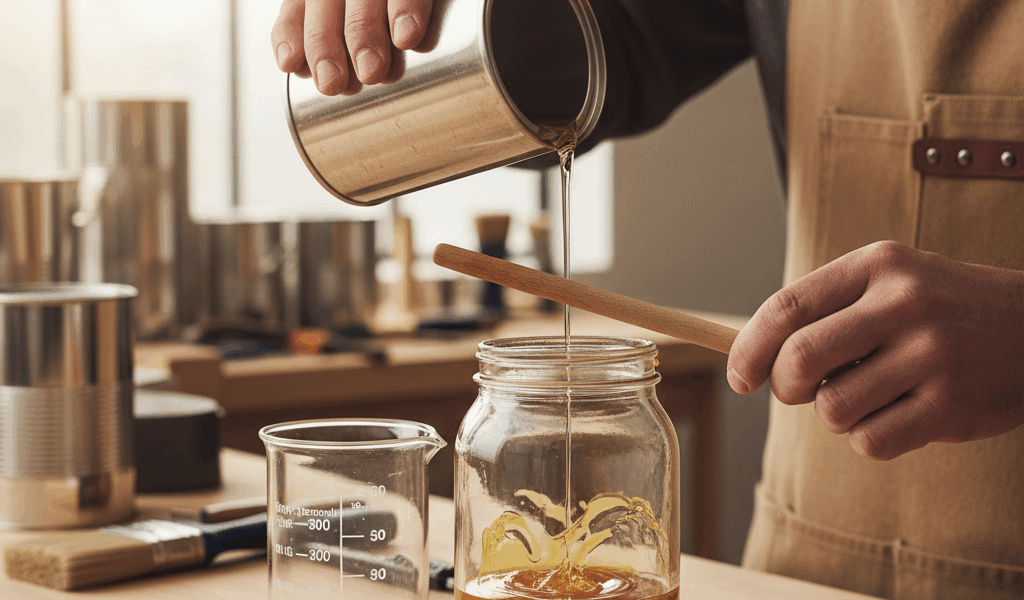
Thinning your first coat of finish has gotten complicated with all the contradictory information flying around. As someone who’s applied thousands of finish coats across decades of furniture building, I learned everything there is to know about sealer coats and why they matter. Today, I will share it all with you.
Thinning your first coat of varnish or polyurethane creates a better foundation and helps subsequent coats adhere properly. I stumbled onto this trick early in my finishing journey, and it’s made a noticeable difference in durability and appearance on every project since.
The Ratio
Mix approximately one part mineral spirits to three parts oil-based finish. For water-based products, use water in similar proportions. This thinner consistency penetrates the wood grain instead of just sitting on top. I’ve experimented with different ratios over the years, and this one consistently gives me the best results.
Why It Works
Probably should have led with this section, honestly. A thinned first coat soaks into the wood fibers rather than pooling on the surface. This creates mechanical adhesion — the finish literally grabs onto the wood from within. Full-strength coats applied over this foundation bond way more effectively than if you’d just slapped on thick coats from the start.
Application Method
Apply the thinned coat with a brush or rag. Wipe off any excess after a few minutes and let it dry completely before applying full-strength coats on top. Don’t rush this part — I’ve made that mistake and it shows.
That’s what makes this technique endearing to us finishers — it’s so straightforward. Many professionals call this a sealer coat. It takes minimal extra time but noticeably improves finish longevity. Once you try it, you’ll never skip it again.


Stay in the loop
Get the latest fine finish wood working updates delivered to your inbox.