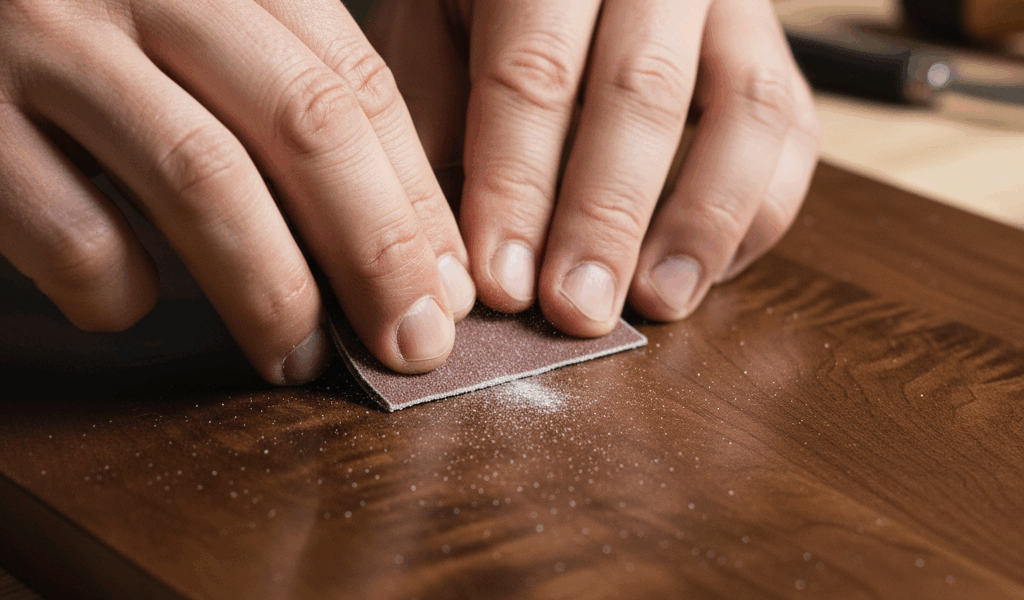
Sanding between finish coats has gotten complicated with all the conflicting advice flying around. As someone who’s been finishing furniture for years and ruined more than a few pieces learning the hard way, I learned everything there is to know about inter-coat sanding. Today, I will share it all with you.
Here’s the thing — light sanding between finish coats removes dust nibs and creates tooth for the next coat to grip. This one step transforms good finishes into professional-quality work. I can’t tell you how many projects I’ve seen where skipping this made the difference between “nice” and “wow.”
Grit Selection
Use 320 to 400 grit sandpaper between coats. I’ve tested this more times than I can count. Coarser grits scratch right through the finish, and finer grits don’t provide enough tooth for the next coat to grab onto. That 320-400 sweet spot works perfectly every time.

Light Touch Required
Probably should have led with this section, honestly. The goal is scuffing the surface, not removing finish. Two or three light passes — that’s it. You’ll know you’re doing it right when the surface looks uniformly dull without any visible scratches or shiny spots left behind. If you’re pressing hard, you’re doing it wrong.
Clean Before Your Next Coat
Sanding creates dust that has to be removed completely before you put anything else on top. I vacuum first, then wipe with a tack cloth. Any particles you leave behind get trapped in the next coat, and then you’re right back where you started.
That’s what makes this step endearing to us finish nerds — it’s dead simple. Ten minutes per coat is all it takes, but it dramatically improves the final appearance. Professional finishers never skip it, and neither should you.




Stay in the loop
Get the latest fine finish wood working updates delivered to your inbox.