What Exterior Finishes Actually Do — UV, Water, and Mildew
Exterior wood finishing has gotten complicated with all the competing product claims and marketing noise flying around. As someone who has spent a decade finishing outdoor woodwork — Adirondack chairs, a sprawling northwest-facing deck, furniture that sits in coastal humidity year-round — I learned everything there is to know about what actually keeps wood alive outside. And it has nothing to do with which product has the best label.
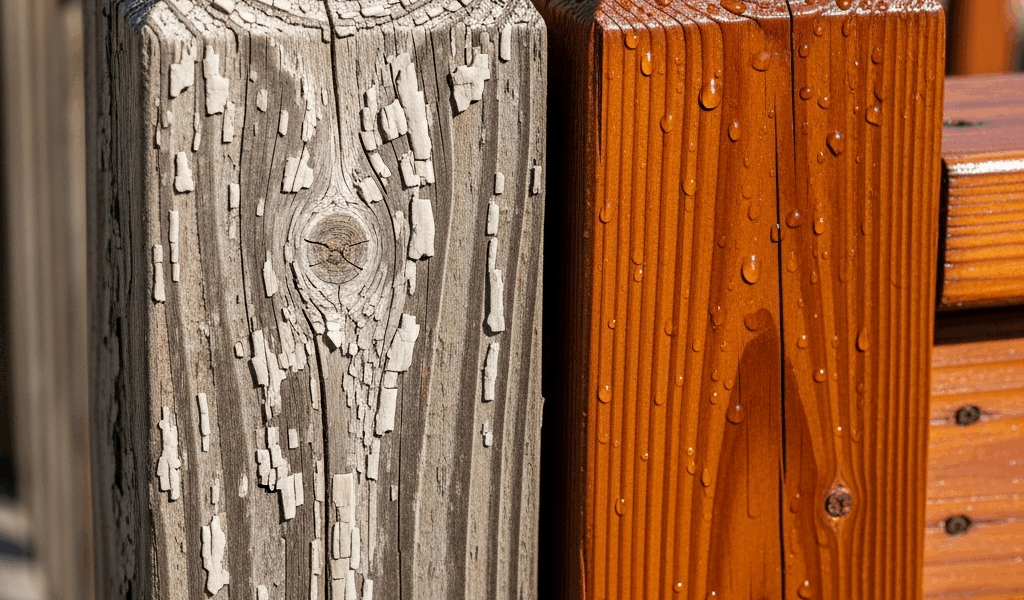
Wood has three enemies. UV light breaks down lignin — the structural glue holding wood fibers together — turning fresh cedar into weathered gray within months. Water swells fibers, causes cupping and warping, and feeds the fungi that rot wood from the inside out. Mildew doesn’t rot anything, but it colonizes the surface fast and makes every finish look like it gave up.
Most finishes handle one or two of these threats. Almost none handle all three equally well. That’s the honest problem nobody in product marketing wants to say out loud.
UV protection comes from blocking light — opaque paint, solid-color stains — or absorbing it through pigments in semi-transparent products. Water protection works one of two ways: a film barrier sitting on top of the wood, like varnish or polyurethane, or penetration into the wood itself, like oils and certain stains. Mildew resistance comes from fungicides in the formula or from a finish so dense that spores can’t find purchase.
The tension is real and it matters. Thick film finishes block water best but fail under UV fastest — they crack, then peel. Penetrating oils let wood breathe and are easy to refresh but offer almost no UV protection. Stains split the difference. They don’t quite excel at anything. That’s what makes choosing the right finish frustrating to us outdoor wood enthusiasts — every option involves a genuine tradeoff.
Marine Spar Varnish — The Gold Standard
Marine spar varnish is what you reach for when durability matters more than your weekend schedule or your materials budget. I started using it eight years ago after a Thompson’s WaterSeal job on my front deck turned into a peeling disaster after two seasons. Never again.
But what is spar varnish? In essence, it’s a film finish built with phenolic or polyurethane resin, engineered to flex as wood expands and contracts with temperature and moisture. But it’s much more than that. The “spar” name comes from boat masts — spars take constant movement, temperature extremes, and prolonged water exposure. A varnish tough enough for a mast will handle your outdoor furniture or trim without much complaint.
The best products are still the old names: Minwax Helmsman Spar Urethane, Interlux Epifanes High Gloss, Deft Interior/Exterior. Helmsman runs $25–$35 a quart. Epifanes is roughly double that — and worth it. Epifanes produces a tighter finish and holds slightly longer between maintenance coats. Helmsman sands easier between coats and applies more forgivingly. Both work. Pick one and commit.
Here’s what spar varnish actually demands from you. Three coats minimum — two coats will fail inside 18 months, every time. Each coat needs a full 24 hours of dry time, followed by light sanding with 220-grit paper. The first coat always looks thin and almost disappointing. Don’t panic. It’s sealing the wood, not building protection yet. Coats two and three do the real work.
Brushes matter here — more than most people expect. Natural bristle, not foam or synthetic. A $12 Purdy XL brush makes a visible difference in how marks lay down. I’ve used them for years and haven’t found anything better at the price.
The hard truth: spar varnish needs reapplication every 12–18 months when the wood takes direct sun and rain. Protected spots — under an eave, beneath a deep porch overhang — might stretch to 24 months. I’ve maintained three outdoor tables with Helmsman for five years. Two still look fresh. One needed full stripping and recoating at year four because I pushed it too long. Don’t make my mistake — the signs are obvious if you actually look.
On horizontal surfaces, spar varnish develops a warm, glassy honey color that looks genuinely good for the first year. After that, it shifts to a slightly amber, translucent cast as UV works on it. That’s not failure. That’s the finish doing exactly what it’s supposed to — sacrificing itself so the wood underneath doesn’t take the hit.
Three coats of Helmsman on a four-person table takes about one quart — call it $30–$35 in material. The time investment is real: surface prep, three separate applications with sanding between each, four days of dry time. But that table handles direct sun for 18 months without issue. Nothing else at that price point comes close.
Exterior Oil Finishes — Easier but Less Protection
Probably should have opened with this section, honestly. Tung oil and Danish oil are fundamentally different animals from varnish. They don’t sit on top of the wood. They go into it — soaking through the surface, curing inside the fibers, never forming a continuous film at all.
Pure tung oil is a drying oil pressed from tung nuts. It hardens on contact with air, building water resistance inside the wood rather than a barrier above it. Danish oil is usually tung oil blended with varnish, resins, and mineral spirits — faster drying, harder cured surface, more workable. Both are legitimate. They serve different needs.
The appeal is obvious and real. You apply with a rag, wipe off excess, and you’re finished. No brush marks, no sanding between coats, no four-day dry time commitment. Reapplication takes 20 minutes. The look is honest — grain shows through without any glassy varnish sheen sitting on top of it.
The problem is protection. Penetrating oils offer maybe 6–9 months of meaningful water resistance in exposed conditions. After that, water penetrates faster than the oil repels it. UV protection is minimal at best. Teak treated with oil grays more slowly than untreated teak — but the oil doesn’t stop graying, it only delays it slightly.
Where oil finishes make sense is on projects where you’re accepting a regular maintenance schedule and actively want minimal appearance change over time. A fence oiled every spring with Sikkens Cetol stays looking warm and alive. You’re not chasing a varnished look — you’re maintaining the wood’s natural character. That’s a legitimate goal.
I used exterior Danish oil on a cedar Adirondack chair for two full seasons. By year one, water stains had appeared under the armrests where water pooled and sat. Year two, water beaded noticeably less — the finish felt thin. Year three, the oil had effectively vanished. The chair wasn’t rotting — cedar resists that — but it looked like it had been left in a field for a decade. Not great.
Reapplying every six months is realistic if you want consistent protection. Most people apply it once, see it look great, and assume it’s holding. It isn’t. That’s why it seems to fail — the maintenance schedule is the product.
Deck Stains and Sealers — When Price Matters
Thompson WaterSeal, Cabot Semi-Transparent, Olympic Rescue — these are the budget tier. Semi-transparent stains with fungicides and water repellents mixed in, running $15–$25 a gallon. One gallon covers 250–400 square feet depending on how porous the wood is.
What they actually do: the pigment blocks some UV. The water repellent — usually paraffin or silicone — beads water for 6–12 months. The fungicide slows mildew. It’s a compromise solution for projects where appearance is secondary and you know going in that you’ll reapply every 2–3 years.
These work genuinely fine on pressure-treated lumber decks where the goal is toning down new wood’s bright yellow-green color. On cedar or redwood, where you’re trying to hold natural color, they’re less satisfying — the semi-transparent tint fades inside one season and leaves the wood looking washed out.
I used Thompson WaterSeal on a pressure-treated deck six years ago with a $60 budget and optimistic expectations. Year one looked great — clean color, no more raw-lumber brightness. Year two, the south-facing side was already breaking down, showing water marks where it had failed. Year three, I stripped the whole thing and switched to a penetrating oil stain. Wasted time, wasted money. Frustrating lesson learned the slow way.
Deck stains are a holding pattern — not a long-term plan. They’re what you use when the budget says under $100 for 500 square feet and you accept that reapplication every two years is part of the deal.
The Best Finish for Each Outdoor Project
Different projects face different conditions. There’s no single best exterior wood finish because an outdoor dining table, a deck surface, a fence gate, and exterior trim all experience different exposure levels and tolerate different maintenance schedules.
Outdoor Table or Bench — Marine Spar Varnish
A table sits still. You access all sides easily. You look at it constantly and you’ll catch problems early. Three coats of Helmsman or Epifanes, recoated every 12–18 months. This is the project where varnish makes genuine sense — the exposure is high, the visibility is high, and the maintenance is actually manageable.
Deck Surface — Penetrating Oil Stain
Deck boards take standing water, foot traffic, and weathering from every direction. A film finish cracks and peels under that load. A penetrating stain — Sikkens Cetol or Olympic Semi-Transparent Oil — soaks in, moves with the wood as it expands and contracts seasonally, and can be spot-recoated without sanding. Reapply every 18–24 months and you’re set.
Fence — Oil-Based Stain
Fence boards are low-visibility — you’re not studying them up close. A light oil stain with UV protection, something like Thompson’s Naturalseal applied every 2–3 years, keeps wood from graying and cracking without demanding much from you. This is where budget solutions actually make sense because the maintenance is purely functional. Nobody needs their fence to look stunning.
Adirondack Chair or Porch Rocker — Exterior Paint or Spar Varnish
For color and durability, exterior paint — Benjamin Moore Advance or Sherwin-Williams ProClassic — gives you 3–4 years between repaints even on surfaces that see regular use. For a natural wood look, spar varnish on a chair works well if you commit to annual touch-ups. Paint is less fussy. Spar varnish looks better. Pick based on your honest maintenance tolerance.
Exterior Trim and Fascia — Spar Varnish or Paint
Trim gets moderate exposure compared to flat horizontal surfaces. Spar varnish handles it well in protected spots — under overhangs, away from direct rain. In coastal areas or wet climates, exterior paint is safer. It adheres better through freeze-thaw cycles and blocks UV completely without cracking the way varnish eventually will.
The practical answer is this: measure your actual maintenance tolerance first, then choose a finish that matches it honestly. Marine spar varnish is the most durable option for wood taking direct weather. Oil stains are the easiest to maintain long-term. Deck stains cost least upfront. Paint is most forgiving when you miss a maintenance window.
No finish is permanent. Every one of them fails eventually — that’s not a flaw, that’s just wood outside in weather. The best exterior finish is the one you’ll actually reapply when it tells you it needs it.



Stay in the loop
Get the latest fine finish wood working updates delivered to your inbox.