Wood grain understanding has gotten complicated with all the technical terminology flying around these days. As someone who ruined plenty of nice boards before finally grasping how grain actually works, I learned everything there is to know about why finishes look great on some pieces and terrible on others. Today, I will share it all with you.
That’s what makes grain knowledge endearing to us furniture finishers — once you understand it, the mystery disappears. You can look at a board and predict exactly how it’ll take stain before you open the can.
How Grain Actually Forms
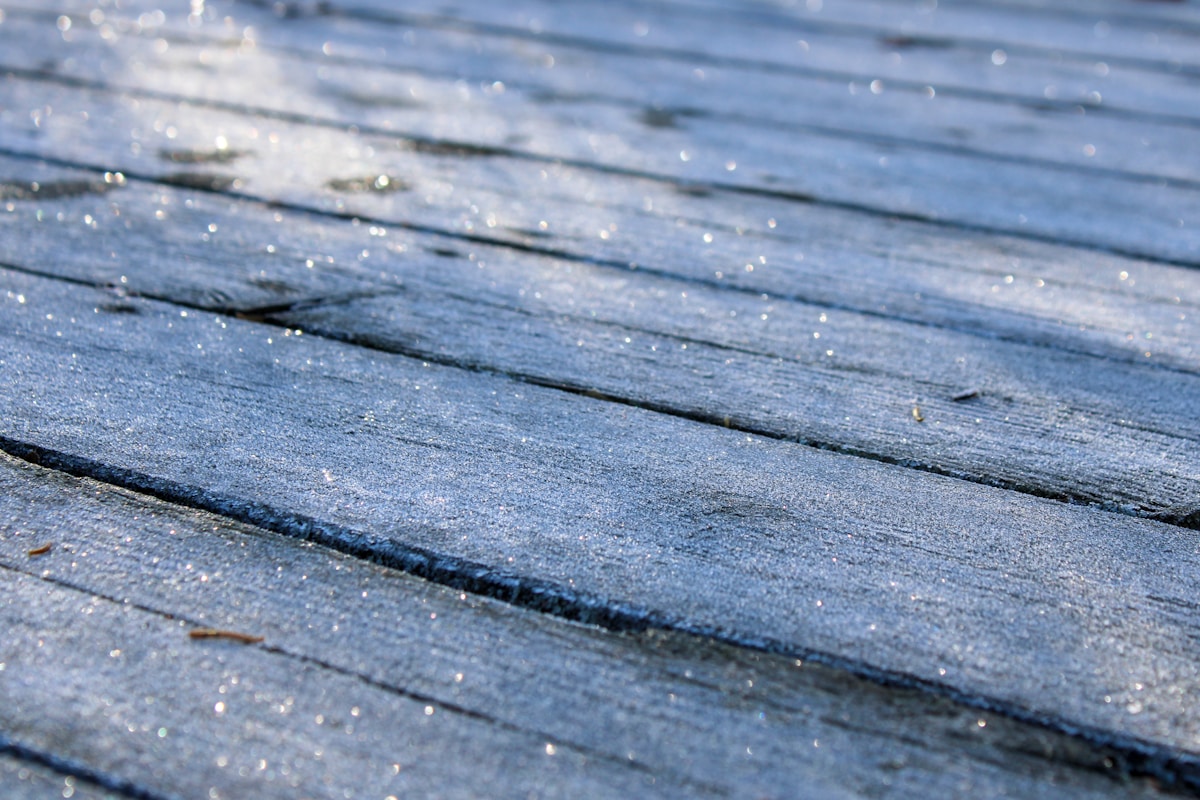
Trees add new wood each growing season as a ring of cells beneath the bark. Spring growth produces larger, weaker cells. Summer growth creates denser, harder cells. This annual cycle creates the visible rings that form grain patterns.
Growth rate affects grain appearance dramatically. Slow-growing trees produce tight, narrow rings with subtle patterns. Fast growth creates wider rings with more dramatic figure. The same species can look remarkably different depending on where it grew.
Different cell types serve different functions. Vessels transport water up the trunk in hardwoods. Rays run radially from center to bark, transporting nutrients. These structures create the unique patterns visible in finished wood — and they’re why oak looks like oak and maple looks like maple.
Probably should have led with this section, honestly: wood density varies within each ring. Early wood cells are larger and absorb more finish. Late wood cells are smaller and denser. This density variation causes most of the finishing challenges woodworkers face.
Ring-Porous vs Diffuse-Porous
Species classification matters for finishing decisions. Ring-porous hardwoods like oak have very large early wood vessels requiring filling for smooth finishes. Skip the grain filler on oak and you’ll see every pore in your final finish.
Diffuse-porous species like maple and cherry have uniform small cells that finish more easily. No grain filling needed. These species take stain more evenly too.

Reading Grain Direction
Grain direction indicates how cells angle through a board. This angle changes depending on how the log was sawn and natural irregularities in the tree. Reading grain correctly prevents tearout during planing and guides sanding direction.
Visual examination reveals grain direction in most cases. Look at the board’s edge and follow the lines. They slope one way or the other. Sand and plane in the direction the grain angles down, not against it.
When visual examination fails, test on scrap or an inconspicuous area. Plane lightly in both directions. The direction that cuts cleanly without lifting fibers is with the grain. The direction that tears is against.
Grain direction can reverse within a single board. Figured wood like curly maple changes direction constantly. This is why hand planing figured wood is torture and why figured pieces often need different finishing strategies.
How Grain Affects Staining
End grain absorbs stain like a sponge because you’re looking straight down the cells. It will always stain darker than face grain unless you seal it first. Some finishers apply a wash coat of thinned shellac to end grain before staining to even things out.
Dense late wood absorbs less stain than open early wood. This creates the classic contrast in ring-porous woods where the grain pattern becomes more pronounced with stain. Sometimes that’s what you want. Sometimes it’s too much.
Gel stains sit on top of the wood rather than penetrating. They reduce the grain absorption differences, creating more uniform color. Useful for pieces where you want even tone, but you lose some of the natural character.
Sanding With Grain
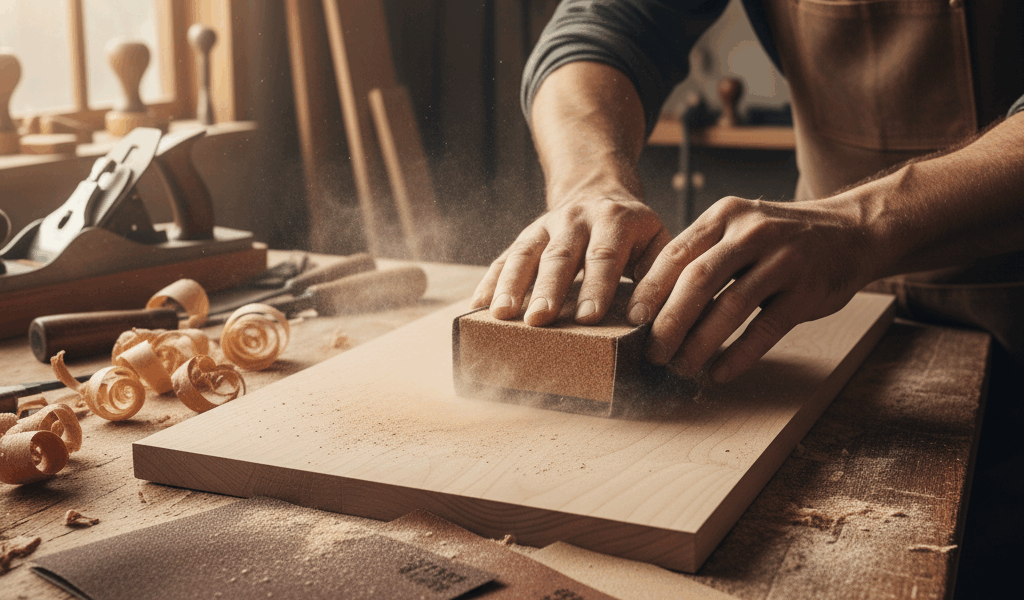
Always sand parallel to grain direction. Sanding across grain leaves scratches visible in the final finish that you won’t see until after you’ve applied stain and it’s too late.
End grain requires more attention. It sands faster than face grain and can become noticeably lower if you’re not careful. Sand end grain with lighter pressure and check your progress frequently.
Progress through grits methodically. Each grit removes the scratches from the previous grit. Skipping grits means those deeper scratches never get removed — they just get hidden until finish reveals them.
Grain and Film Finishes
Film-building finishes like polyurethane and lacquer sit on top of the wood rather than soaking in. They minimize grain texture differences in the final surface but can’t completely hide them.
Multiple thin coats work better than few thick coats. Each coat levels slightly. Sanding between coats with high grits removes imperfections and provides tooth for the next coat.
Open-pore finishes leave grain texture visible and tactile. Closed-pore finishes fill the grain completely for a glass-smooth surface. Neither is better — they’re different choices for different aesthetics.
Working With What You Have
Every board tells you what it needs if you pay attention. Dense, fine-grained woods finish easily. Open, porous woods need more preparation. Figured woods require patience and possibly different techniques altogether.
Test your finishing approach on scrap from the same board before committing to the visible surfaces. What works on one species or even one board may not work on another. The few minutes spent testing saves hours of frustration.


Stay in the loop
Get the latest fine finish wood working updates delivered to your inbox.