
Polyurethane: The Durable Choice

Polyurethane is the most common protective finish for wood due to its excellent durability, water resistance, and availability. Understanding the differences between oil-based and water-based formulations helps you choose the right product and apply it successfully.
Oil-Based vs. Water-Based Polyurethane
| Characteristic | Oil-Based | Water-Based |
|---|---|---|
| Color | Amber, warms wood tone | Crystal clear |
| Dry time | 4-6 hours | 1-2 hours |
| Odor | Strong, requires ventilation | Mild |
| Durability | Excellent | Very good |
| Cleanup | Mineral spirits | Soap and water |
Surface Preparation
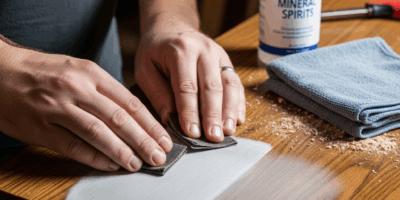
Proper preparation prevents most polyurethane problems:
- Sand to 180 grit for stained surfaces, 220 grit for natural wood.
- Remove all dust with vacuum and tack cloth.
- If using water-based poly, wet the surface first to raise the grain, let dry, then sand smooth.
- Apply dewaxed shellac as a sealer over problem woods like pine to prevent blotching.
Application Technique
- Thin the first coat: Mix 10-20% mineral spirits (oil-based) or water (water-based) for better penetration.
- Apply with brush or foam applicator: Work in the direction of the grain. Avoid overworking the finish.
- Remove bubbles: Lightly tip off the surface with just the brush tips.
- Sand between coats: Use 220-320 grit after each coat is fully dry. Remove all sanding dust.
- Apply 3-4 coats: More coats for high-wear surfaces like tabletops and floors.
Troubleshooting
- Bubbles: Don’t shake the can—stir gently. Apply thinner coats.
- Brush marks: Use a quality brush, apply thinner coats, and tip off properly.
- Dust nibs: Work in a dust-free environment, sand between coats.
- Cloudy finish: Usually moisture-related. Ensure low humidity and dry wood.

Stay in the loop
Get the latest fine finish wood working updates delivered to your inbox.