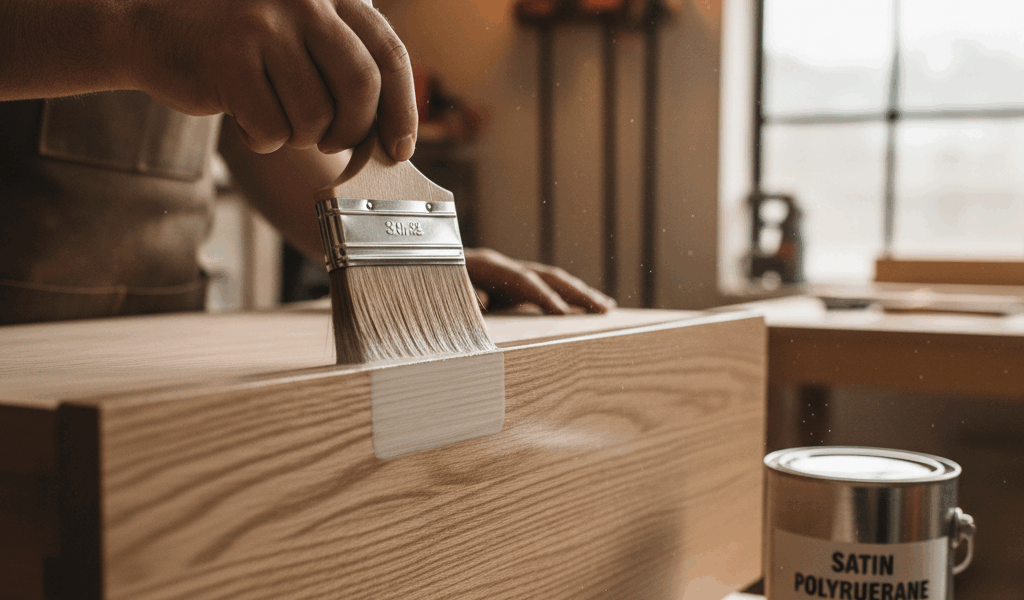
Satin Hides Scratches: Why 70% of Furniture Uses This Sheen

The Professional’s Preferred Sheen

Walk through any furniture showroom and observe the sheens. Dining tables, dressers, cabinets, desks—the vast majority share one characteristic: satin finish. Not quite matte, not remotely glossy. That soft, forgiving sheen that looks elegant without demanding attention.

This isn’t coincidence. After decades of finishing everything from antique restorations to production furniture, I can confirm what the industry knows: satin sheen makes practical sense for most applications. Here’s why approximately 70% of furniture leaves shops with satin finish.

The Scratch-Hiding Advantage

Every finish scratches eventually. Daily use creates micro-abrasions. Moving items across surfaces leaves marks. Keys, fingernails, watches—life scratches furniture. The question isn’t whether scratches will appear but whether they’ll be visible.

Gloss finishes show every scratch. Light reflects uniformly off a glossy surface, so any disruption in that uniformity stands out. Even microscopic scratches become visible lines in glossy finish. Within months of regular use, glossy surfaces develop a network of visible damage.

Satin finishes scatter light. The surface already consists of microscopic texture that diffuses reflection. When scratches occur, they blend into this existing texture rather than standing out against mirror-smooth uniformity. The same scratch invisible on satin would glare on gloss.

Why Not Go Matte?

If scattered light hides scratches, why not choose dead-flat matte? The answer is depth. Flat finishes can appear lifeless, obscuring the wood beneath rather than enhancing it. The complete absence of reflection makes surfaces look dusty or unfinished to many eyes.

Satin provides enough light reflection to show depth and clarity while still offering scratch-hiding benefits. It’s the compromise point that satisfies both aesthetic and practical requirements. The wood glows without glaring.

Client Perception Studies

Furniture manufacturers have tested consumer preferences extensively. When shown identical pieces with different sheens, most buyers choose satin. High gloss reads as too formal or too difficult to maintain. Flat reads as unfinished or industrial. Satin reads as quality and elegance without pretension.

The preference holds across demographics and price points. Budget furniture and luxury furniture alike favor satin sheen for the same reasons: it looks good, stays looking good, and matches most decor without conflict.

Technical Definition of Satin

Sheen levels are measured in gloss units at specific angles. Industry standards define satin as 35-45 gloss units measured at 60 degrees. For comparison:

Flat/Matte: 0-10 gloss units
Low sheen: 10-25 gloss units
Satin: 35-45 gloss units
Semi-gloss: 45-65 gloss units
High gloss: 75+ gloss units

These numbers matter when matching sheens across different pieces or touch-up work. A “satin” label means different things to different manufacturers—knowing the actual gloss reading ensures consistency.

Achieving Satin Finish

The simplest approach uses satin-formulated products. Most finish manufacturers offer satin versions of their polyurethanes, lacquers, and water-based finishes. These contain flatting agents—microscopic particles that scatter light at the surface.

For more control, you can rub out a gloss finish to satin. Wet-sanding with 1500-2000 grit followed by fine steel wool (0000) creates even satin sheen with perfect consistency. This approach lets you adjust sheen precisely rather than accepting whatever the can provides.

The rubbing-out method produces superior results on high-visibility pieces. Factory satin finishes sometimes show inconsistent sheen—areas where the flatting agents distributed unevenly. Hand-rubbed satin is perfectly uniform.

Maintenance Advantages

Satin finishes are easier to clean than glossy ones. Fingerprints that show clearly on gloss disappear on satin. Water spots that require polishing on gloss wipe away on satin. Dusting doesn’t create visible swirl marks the way it can on high-gloss surfaces.

When touch-ups are eventually needed, satin is more forgiving. Matching gloss levels precisely is challenging; matching satin levels is much simpler. Spot repairs blend invisibly where the same repair on gloss would stand out.

When to Choose Differently

Satin isn’t universal. Formal dining tables may warrant semi-gloss or higher for gravitas. Piano-black lacquer only works at high gloss. Rustic furniture often looks better in flat or low-sheen finishes. Art furniture may use gloss for dramatic effect.

Consider the piece’s context, usage, and the client’s maintenance commitment. But when uncertain, satin is the safe choice. It’s the default for good reason.

The Professional Consensus

Ask any production finisher what sheen they spray most often. The answer is satin. Ask restoration specialists what sheen matches most antiques. Satin again. Ask furniture designers what they specify. Still satin.

The 70% figure isn’t arbitrary—it reflects the accumulated wisdom of an entire industry. Satin finishes look beautiful, last beautifully, and maintain beautifully. For most furniture, that combination makes the decision simple.

Jason Michael

Jason Michael

Author & Expert

Jason Michael is a Pacific Northwest gardening enthusiast and longtime homeowner in the Seattle area. He enjoys growing vegetables, cultivating native plants, and experimenting with sustainable gardening practices suited to the region's unique climate.

19 Articles
View All Posts

Subscribe for Updates

Get the latest articles delivered to your inbox.