Your coffee table catches more daily punishment than any other piece of furniture you own. Books, mugs without coasters, laptop corners, kids dropping action figures, feet up at the end of a long day. The finish has to survive all of it without looking trashed after six months — and most forum advice just loops between “I like poly” and “oil is fine” without ever giving a straight durability ranking.
This article includes affiliate links. We may earn a commission at no extra cost to you.
Here is the explicit ranking. Most durable to least.
The Most Durable Coffee Table Finish: The Ranking
Toughest to softest, this is the hierarchy:
1. Catalyzed lacquer / conversion varnish. What furniture factories spray on production pieces. Hardest film available, best scratch and chemical resistance. Requires real spray equipment and a proper ventilation setup. Not happening in most home shops, but it is the benchmark everything else gets measured against.
2. Oil-based polyurethane. The best choice you can actually use at home. Hard film, fights off scratches and ring marks, sits on the shelf at every hardware store in America.
3. Water-based polyurethane. Noticeably less durable than oil-based. Softer film that is more prone to white ring marks when a hot mug or cold glass sits on it.
4. Hard wax oil (Rubio Monocoat, Osmo). Beautiful to look at, beautiful to touch. Requires regular maintenance. Falls short for daily coffee table abuse.
5. Danish oil / tung oil. Penetrating finishes without meaningful surface protection. Fine on a wall-mounted shelf. Not built for a table people actually use.
That ranking reflects measurable hardness and abrasion resistance, not personal preference. Choose from the top, not the bottom.
Oil-Based Polyurethane: Best Practical Choice
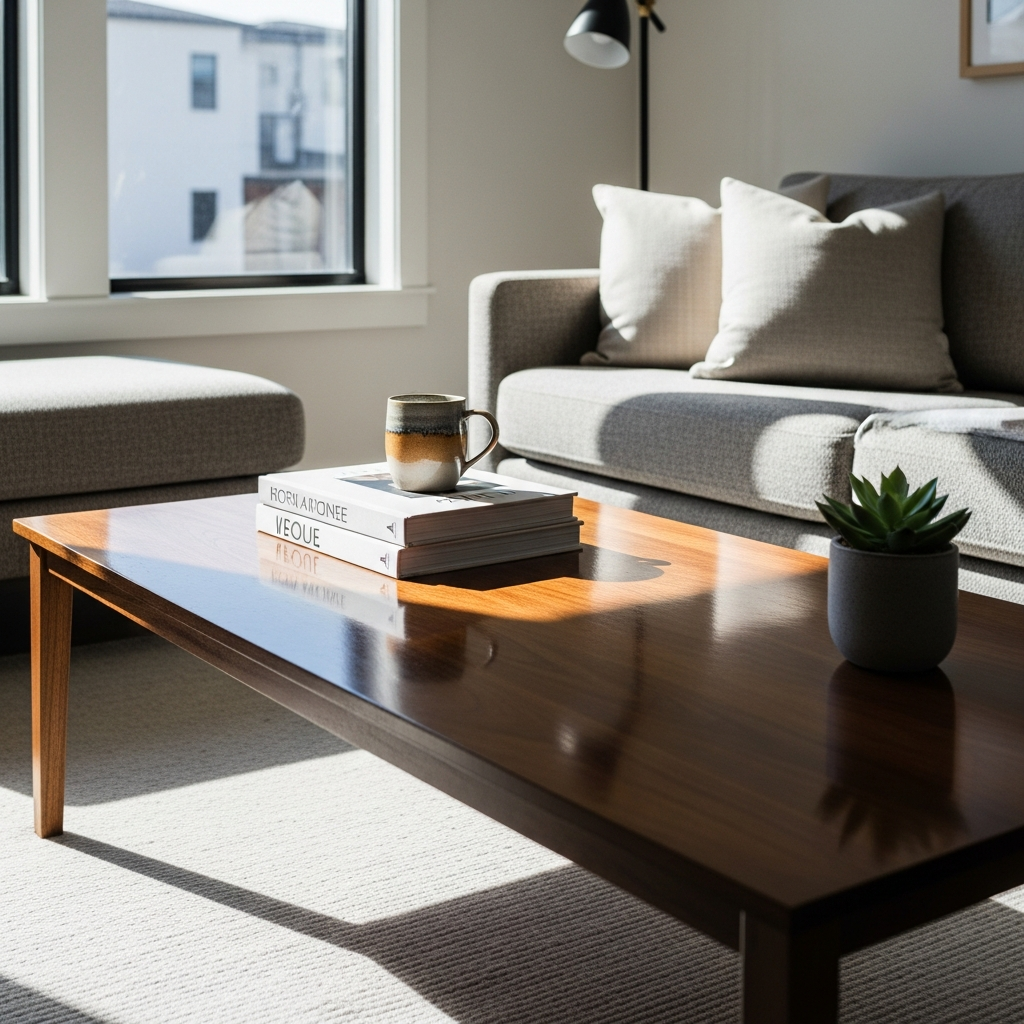
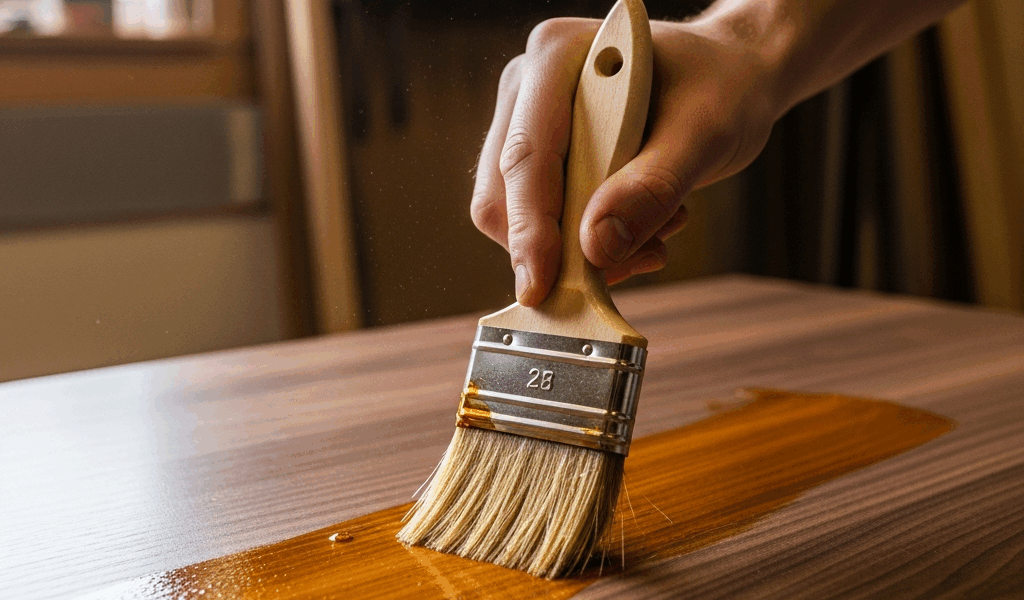
Oil-based poly builds a hard film and develops a warm amber tone as it cures. On walnut or cherry, that amber deepens the wood’s natural warmth in a way that looks rich without being fake. It levels well when brushed thin, shrugs off scratches from daily contact, and handles ring marks from glasses better than anything else you can brush on.
Application secret: thin coats. I learned this the hard way. Loading the brush and laying it on thick feels like progress, but thick coats cure slower, develop runs more easily, and end up measurably softer than three thin coats. Three minimum for a coffee table. Sand lightly between coats with 320 grit.
General Finishes Arm-R-Seal and Minwax Helmsman both get the job done. Arm-R-Seal wipes on with a cloth pad, which gives you more control than a brush if you are nervous about runs. Either product, three thin coats, proper dry time between — and you have a coffee table finish that holds up to years of real family use.
The number that changes everything: 30-day full cure. The surface feels dry in 24 hours. Looks completely done in 48. But the polyurethane keeps hardening internally for a full month. Do not load the table with books on day three. Do not skip coasters in the first week. Wait the month, and then the finish is genuinely tough.
Water-Based Polyurethane: When to Use It
Water-based poly dries crystal clear with zero amber shift. Faster dry time, lower VOC — matters a lot if your shop is a poorly ventilated basement or attached garage where fumes become a health issue.
The downside is real though. Measurably softer film than oil-based. More vulnerable to those white ring marks from hot coffee mugs and cold beer glasses. The moisture and heat cause the film to cloud, and those white circles do not buff out.
Use water-based poly when preserving exact wood color matters more than maximum durability. Light maple, white oak, bleached or painted surfaces where oil-based poly would push the color warmer than you want. On a coffee table with these light woods, just accept the coaster lifestyle — the finish requires it.
What to Avoid on a Coffee Table
Hard wax oil (Rubio Monocoat, Osmo Polyx): the look and feel are genuinely stunning. Matte, natural, silky under your hand. But a coffee table surface needs re-oiling every few months under heavy use. Skip one cycle and you start seeing dry spots and wear marks. For a formal side table that nobody touches, sure. For the one where your family actually hangs out every night, pass.
Tung oil and Danish oil: they soak into the wood and enhance the grain beautifully. Zero surface protection. I finished an end table with Danish oil about three years back — looked incredible for maybe six weeks. Then every water ring stayed, every book scratch showed, and I was refinishing it by Thanksgiving. Switched to oil-based poly. Problem solved permanently.
Shellac: dissolves in alcohol on contact. Tip a glass of wine on a shellac coffee table and the finish dissolves where the wine touches. That is not an exaggeration — alcohol is literally the solvent for shellac. Cross it off the list for any surface that might see beverages.
The Application That Determines the Outcome
Which product you buy matters less than how you put it on. A mid-shelf polyurethane applied in three careful thin coats will outperform a premium product slapped on heavy in one pass. Every single time.
Sand to 220 grit before any finish touches the wood. Clean every speck of dust with a tack cloth — particles trapped under poly become permanent bumps. Thin the first coat about 10 percent with mineral spirits. That thinned coat bites into the wood and creates a bond layer for everything above it.
Full-strength coats after that. Sand with 320 between each — just enough to scuff for adhesion, not enough to cut through. Give each coat a full 24 hours even though it feels dry in four. Three coats minimum. If you have the discipline for four, the table will thank you.
A coffee table with three thin coats of oil-based poly, each sanded between and given honest dry time, handles years of family life without flinching. That is the real answer to the durability question. Not which brand — how you apply it.
Stay in the loop
Get the latest fine finish wood working updates delivered to your inbox.