You are looking at sander listings and the names make no sense. “Finish sander.” “Sheet sander.” “Palm sander.” “Random orbital sander.” Four names that sound like four different tools. They are not. Two of those names describe the exact same tool, and mixing them up means buying the wrong sander for your project.
This article includes affiliate links. We may earn a commission at no extra cost to you.
The Name Confusion: Finish Sander = Sheet Sander = Palm Sander
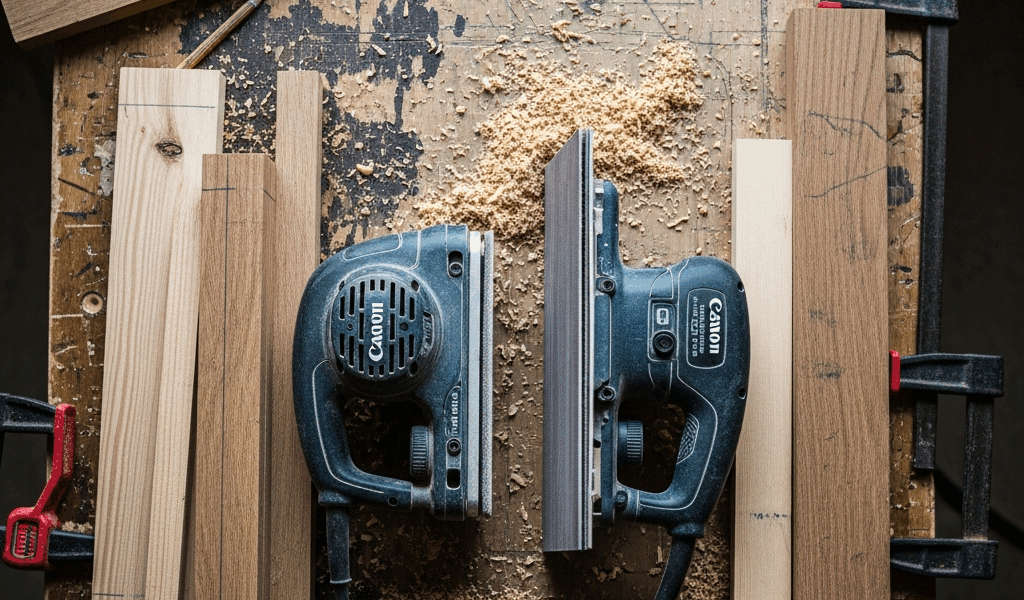
A finish sander, a sheet sander, and a palm sander are all the same tool. Exactly the same. It takes a quarter sheet of standard 9×11 sandpaper, vibrates in tiny orbital movements, and fits in one hand. “Finish sander” is just a marketing name that caught on. Some brands label it a palm sander because of how you hold it. Others say sheet sander because of the sandpaper format. One tool, three labels.
A random orbital sander is a completely different machine. Round pad. Different motion pattern. Different job. Everything below treats these as what they actually are — two distinct tools, not four.
What a Finish Sander (Sheet Sander) Does
The finish sander vibrates in a tiny orbit — way smaller than a random orbital. That small movement makes it gentle and controlled. Slow material removal, smooth results.
The rectangular pad is the whole reason this tool exists. It gets into right-angle corners, sits flush against edges, and reaches tight spots where a round sanding pad physically cannot fit. Drawer fronts, cabinet face frames, the inside corners of a jewelry box — anywhere two flat surfaces meet at 90 degrees, the sheet sander handles it.
Best job for it: final sanding at 180 to 220 grit before you apply finish. You are not removing wood at this stage, you are smoothing. The sheet sander does this without accidentally rounding over crisp edges or sanding through veneer. I keep one loaded with 220 on the bench at all times. It gets picked up for the last pass on nearly every project I build.
What a Random Orbital Sander Does
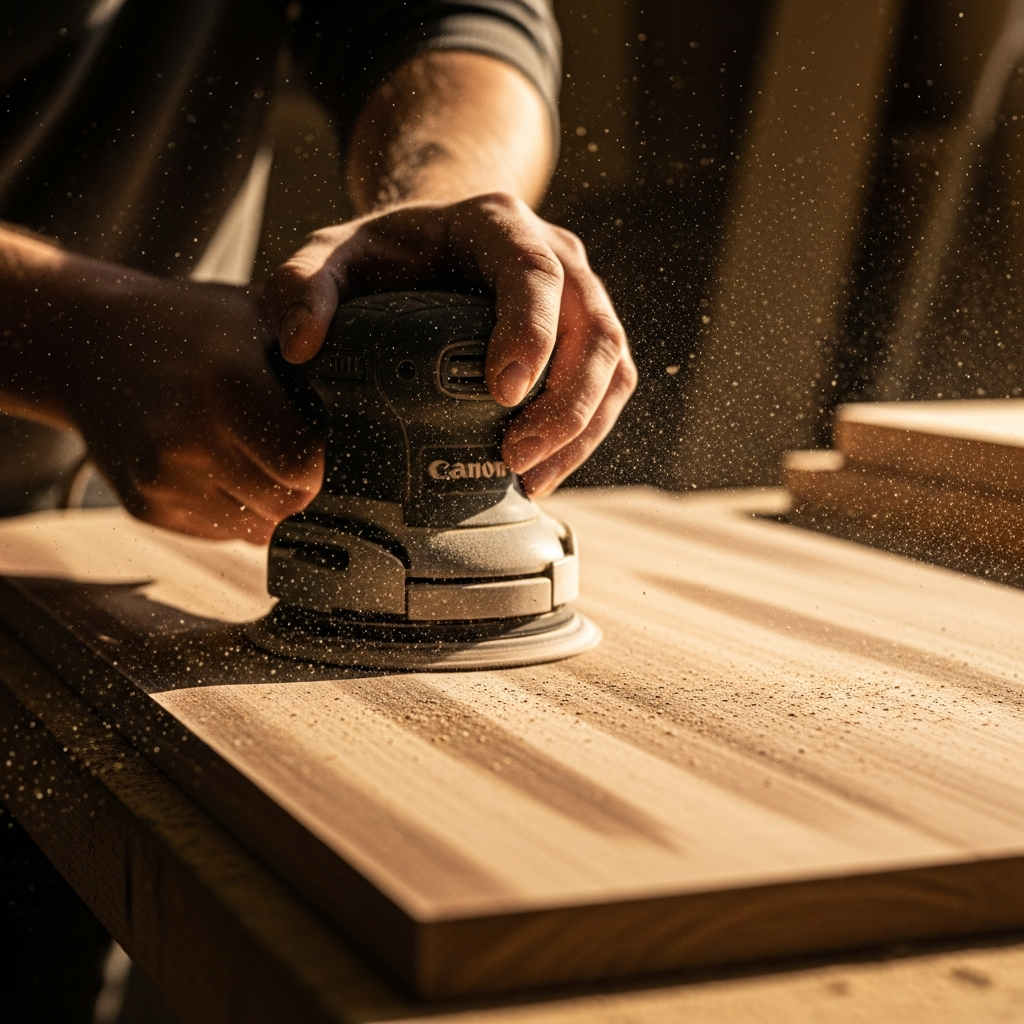
The random orbital does two things at once — the pad spins and simultaneously orbits in a random pattern. That dual motion prevents the sander from tracking in one direction, which is what causes those parallel scratch marks you see from a belt sander or even a fixed orbital.
Way more aggressive material removal than a sheet sander. The 5-inch round pad covers more surface per pass and the random motion lets you power through grits. Start at 80, work through 120 and 150, and a rough panel is ready for final prep in minutes — not the half hour a sheet sander would take on the same board.
This is the workhorse. Flattening glue-ups, stripping old finish, smoothing rough lumber, prepping panels — the random orbital handles about 80 percent of sanding tasks in a typical shop. The round pad only becomes a limitation when you need to get into tight corners. Which is exactly when you reach for the sheet sander.
Which Sander for Which Situation
Flat surfaces with corners — drawer fronts, cabinet sides, box interiors: sheet sander. The rectangular pad reaches where the round pad physically cannot.
General panel prep, removing old finish, flattening glue joints, anything involving actual material removal: random orbital. Faster and the scratch pattern is more forgiving.
A table top or large panel going from rough to ready: start with the random orbital at 80 grit, work up through 120 and 150, then switch to the sheet sander at 180 and 220 for final smoothing. Most woodworkers who own both make the handoff around 180 grit. The random orbital did the heavy lifting. The sheet sander does the precision work before finish goes on.
The Verdict: Buy the Random Orbital First
If you are buying one sander, make it the random orbital. It handles more tasks across more stages of a project than any other sander type. The DeWalt DCW210B cordless runs $130 to $160 and covers everything from rough prep through 180 grit smoothing without being tethered to an outlet.
Add a sheet sander as your second tool. The Ridgid R2601 runs $30 to $40 and does the one thing the random orbital cannot — get a flat pad into right-angle corners. For the cost of a pizza dinner, you complete the sanding workflow.
Both tools together cost less than a single premium random orbital. Own both, hand off at 180 grit, and the difference in your finished surfaces will be obvious.



Stay in the loop
Get the latest fine finish wood working updates delivered to your inbox.